RELATED CONTENT

Fast Track to the 5G Edge
Best practices for implementing cloud-native, container-based microservices on a service-based architecture.
Modernizing Service Providers have been building optimized mobile networks with F5 NFV solutions and now Service Providers are building 5G networks with F5 solutions. The F5 solution suite including Service Proxy for Kubernetes, containerized network functions, and service mesh is available for cloud native 5G platforms.
Cloud Native 5G Transformation
Service providers have deployed 5G radio access networks and are now deploying standalone 5G networks, unlocking the future growth potential for technology innovations enabled only on cloud native platforms.
In recent years, according to the GSMA, “The 5G era will commence in full from 2020, creating huge opportunities for consumers, enterprises, operators, vendors, and all stakeholders.” The report, The Mobile Economy 2020, showed that by the start of 2020, 46 operators in 24 markets had commercially available 5G. It also noted that operators are expected to spend $1.1 trillion worldwide in mobile CapEx over the next five years, roughly 80 percent of that on 5G networks.1
5G offers the potential for 10 to 100 times higher data rates, possibly as high as 10 Gbps.
Radio Access upgrades, and "Standalone" 5G core networks and edge computing compared to legacy 4G networks are profound transformation from around 20 milliseconds to as little as 1 millisecond, with ultra reliability: 99.999 percent, and 10 to 100 times higher data rates, possibly as high as 10 Gbps.
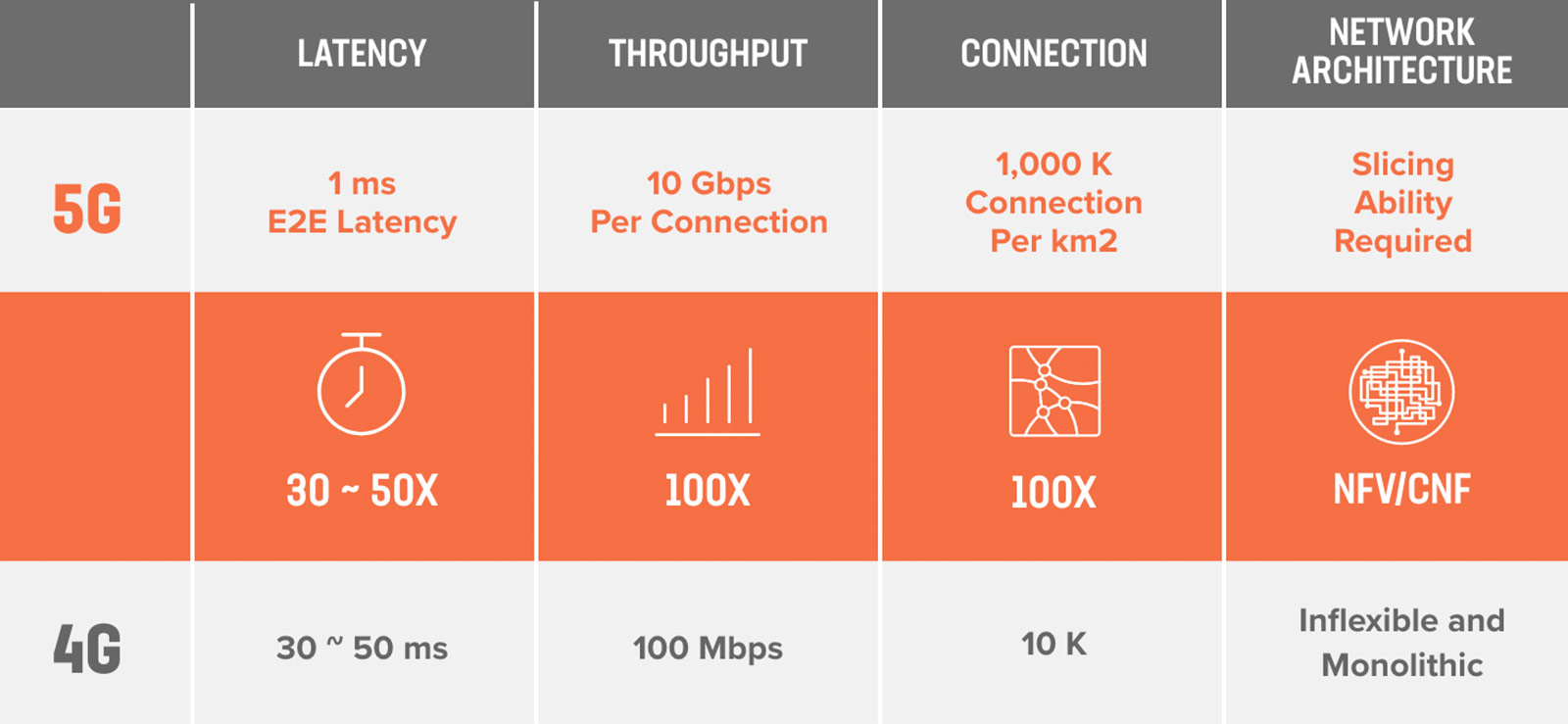
Figure 1: The advantages of 5G over 4G LTE networks include massive increases in speed, connection density, and efficiency.
The increased speed and reduced latency, combined with the ability to connect with billions of devices, opens a whole new future for applications that are available to more subscribers. New capabilities generate roughly 1,000 times greater data volumes than are present on today’s mobile networks. Competetive service providers quickly conceive, develop, deploy, and scale new applications and services.
Cloud Native with full automation
Future applications in a 5G future scale immensely with full automation across multi vendor integrations that interoperate using standard Kubernetes API's. Service Providers enabling a fully orchestrated cloud platforms are confident building micro services platforms with F5's declarative automation interface.
Modern applications are able to grow, shrink, defend themselves, and heal any damage based on the environment they’re in and how they’re being used.
Containerized applications help reduce TCO because they allow the automation of the routine tasks and actions that make up a large proportion of data flow through the network—which is important when you’re dealing with such high data volumes. Containerized applications can also scale both predictively (for example, in response to expected increases in demand like the ones retailers see for Black Friday/Cyber Monday), as well as on demand. This ability to scale helps keep CapEx and OpEx under control. Additionally, the same data that enables adaptive applications to be responsive to demands can be used to develop AI and machine learning solutions that further optimize performance.
Like any applications, adaptive applications require app services. The telecom chapter of the F5 State of Application Services Report Telecom Edition revealed that, on average, service providers each have more than 1,000 applications to support, and that 90 percent of those apps have multi-cloud deployments. As a result, service providers are prioritizing application services that provide application and network security as well as access control. They are also looking for app services that easily integrate with existing and future architectures.
Capturing the potential of 5G will require applications that continually adapt to the use,
environment, and CI/CD innovations.

APPLICATION SERVICE
AVAILABILITY
Application-centric
service availability

APPLICATION
PERFORMANCE
A network optimized for
apps running on top

APPLICATION
SERVICE QUALITY
Application-centric
quality treatment

APPLICATION
INSIGHT
Application-centric
visibility and analytics
Making 5G Work: Infrastructure
Future demands on the need for speed and agility, competetive service providers build full automated platforms while maintaining high performance, flexibility, and security. From an infrastructure perspective, service providers will be offering most of these new services on a new standalone (SA) 5G Core. This new infrastructure will deliver greatly enhanced and flexible service creation, automation, scalability, and resilience.
In practice the 5G Core shares all the major characteristics of modern adaptive application platorms:
• Cloud-native
• Microservices-based
• Built on a service-based architecture
• Containerized (in Kubernetes)
• Designed to incorporate a service mesh
Implementing a service-based architecture (SBA) on a cloud-native infrastructure is the transformative prerequisite towards deploying "Stand Alone" 5G Core networks. A critical inflection point is occurring; when service providers implementing a Service Based Architecture, 5G makes it possible to deploy and manage the distributed networks needed for modern application requirements, for scaling subscriber growth. Service providers multi-cloud networks respond to increasing demands for instantaneous access to cloud services from the core, edge, and far edge of the network. A 5G cloud-native infrastructure is the catalyst that merges traditional service provider IT and network groups, creating an enterprise-centric 5G network.
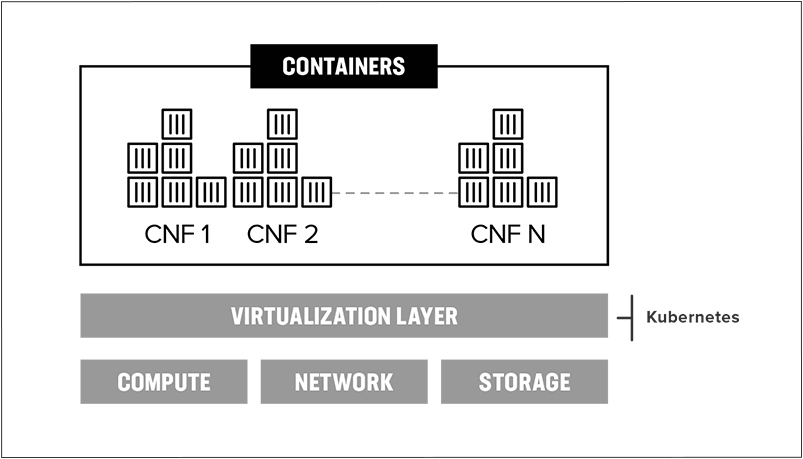
Figure 2: Cloud-native containerization promotes agility, speed, and efficiency.
BENEFITS OF A SERVICE-BASED ARCHITECTURE
1 | Modularity and reusability
The network is composed of modularized services (microservices) which split monolithic services into discrete functions that can be upgraded or scaled independently and can also be reused in different network functions.
2 | Cloud-native
Cloud-native computing allows for continuous delivery, which reduces the time to test and integrate applications and, in turn, reduces the time to market to deliver new features or bug fixes. Cloud-native microservices are almost always containerized using Kubernetes, which allows them to be centrally orchestrated and moved between locations regardless of the underlying infrastructure.
3 | Extensibility
Service-based interfaces can easily be scaled without introducing new reference points, and traffic can be readily balanced or offloaded by deploying a new instance of the network function service.
4 | Openness
A service-based interface (as well as some control functions, such as authentication) can easily be exposed to external users, such as third-party application developers. Service providers can also build networks with best-of-breed solutions rather than being locked into a single vendor.
Making 5G Work: Management
In addition to the baseline infrastructure needed for a successful SA 5G Core implementation, service providers ensure that networks meet key requirements that optimize Quality of Experience (QoE), as well as securing networks against an evolving threat landscape that takes advantage of 5G’s increased attack surface. This early in the 5G transformation journey, service providers implementing a cloud-native infrastructure as leaders in the industry.
The 5G infrastructure is built on a cloud-native containerized workloads managed using Kubernetes, which requires extended functionality for carrier grade deployments; service providers building cloud native platforms using Kubernetes require F5 solutions to enhance the platform to manage mobility protocols.
Visibility: Network traffic visibility is vital in any mobile network and even more so in a 5G network. Kubernetes does not inherently provide ingress or egress traffic visibility into the Kubernetes nodes and clusters. F5 is the leading vendor in encryption/decryption, gaining visiblity to policy enforced security chains
Security: Security controls applied at multiple points in the network and across multiple layers consolidated with declarative interfaces.
Control: Policy management and analytics enable network control and are essential in automating an already complex 5G network.
A containerized, cloud-native 5G architecture is critical to meeting diverse service requirements. Container workloads managed with Kubernetes are particularly important. Their dynamic nature easily adapts to the needs of the network, promoting agility, speed, and efficiency by allowing for the proper placement of an application and its workloads within the network.
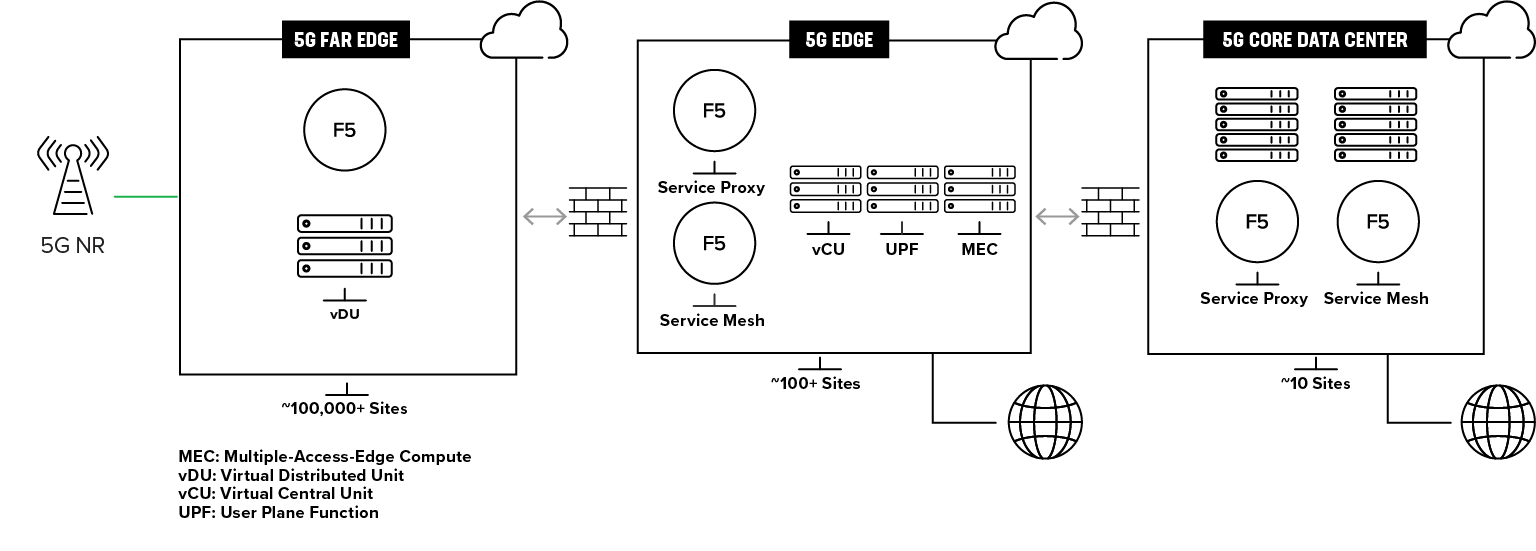
Figure 3: A 5G cloud-native infrastructure can help deliver instantaneous access to cloud services in a platform-agnostic way, from the core, edge, and far edge of the network.
Conclusion
Service providers are transforming as 5G standalone networks that run on a cloud-native infrastructure, using service-based architectures, and including hundreds if not thousands of edge compute facilities.
The transition to modernized services on a standalone 5G Core puts service providers at the intersection of the telecom and IT worlds. F5 has solutions and extensive experience servicing modernizing platforms helping service providers transition to the 5G Core and 5G signaling.